

Most American printer brands found in Canadian offices eventually face the reality of end-of-life, yet over 60 percent of small businesses still overlook secure and eco-friendly disposal methods. For office managers and procurement specialists, this topic goes beyond routine upgrades—it directly impacts data security, compliance, and environmental responsibility. This guide breaks down how Canadian workplaces can make smart, cost-effective choices when retiring office printers without risking privacy or sustainability goals.
| Point | Details |
|---|---|
| End-of-Life Definition | The end-of-life for office printers is when they transition from active service to requiring disposal, considering both equipment condition and data security. |
| Performance Indicators | Key signs of a printer nearing its end include performance degradation, high maintenance costs, and lack of compatibility with new technologies. |
| Disposal Processes | Businesses should adhere to data sanitization, physical destruction, recycling, or donation methods based on data sensitivity and compliance requirements. |
| Legal Compliance | Proper disposal of printers is mandated by Canadian laws, emphasizing data sanitization and responsible recycling to mitigate risks of data breaches and environmental harm. |
For Canadian businesses, understanding the end-of-life lifecycle of office printers involves recognizing multiple technical and operational dimensions. The Canadian Centre for Cyber Security provides crucial guidance, defining end-of-life as the stage when a printer transitions from active service to a device requiring careful disposal and data management. This definition encompasses both physical equipment condition and critical data security considerations.
Printers reach their end-of-life through several key indicators: consistent performance degradation, increased maintenance costs, technological obsolescence, and potential data security risks. When repair expenses approach 50% of a new device’s cost, most businesses recognize it is time to retire the printer. Secure data sanitization procedures become paramount during this transition, as electronic memory can retain sensitive organizational information even after standard deletion processes.
Businesses must evaluate end-of-life based on multiple factors beyond simple equipment age. Performance metrics like print quality, speed, energy efficiency, and compatibility with current workplace technology platforms all contribute to determining when a printer should be replaced. Public Works and Government Services Canada emphasizes that operational standards play a significant role in making these critical replacement decisions, ensuring businesses maintain productive and secure printing environments.
Pro tip: Before disposing of any printer, always conduct a comprehensive data sanitization process and consider environmentally responsible recycling options through certified electronic waste management services.
Recognizing when an office printer has reached its operational limit requires careful assessment of multiple performance indicators. Small businesses must track specific warning signs that signal the device is approaching its end-of-life, potentially compromising workplace productivity and efficiency. Critical equipment risk factors help organizations make strategic replacement decisions before complete system failure occurs.
Key performance indicators of printer end-of-life include persistent mechanical issues, escalating maintenance costs, and declining print quality. Typical signs emerge through recurring problems such as frequent paper jams, inconsistent print outputs, excessive error messages, and increased time spent on troubleshooting. When repair expenses consistently approach 50% of a new printer’s cost, businesses should strongly consider replacement. Technological obsolescence becomes another critical factor, especially when the printer cannot integrate with current workplace software or network infrastructure.

Beyond mechanical performance, security and compatibility represent crucial end-of-life considerations. Older printers might lack current cybersecurity protections, leaving organizations vulnerable to potential data breaches. Additionally, manufacturers often discontinue technical support and firmware updates for aging printer models, creating potential operational risks. Inspection criteria for printing equipment recommend evaluating printers holistically, considering not just immediate functionality but long-term technological alignment with organizational needs.
Pro tip: Maintain a quarterly assessment log tracking your printer’s performance metrics, repair costs, and compatibility to proactively identify potential end-of-life indicators before critical failures occur.
Printer end-of-life processes represent critical strategic decisions for businesses seeking to protect sensitive data and maintain environmental responsibility. Data sanitization strategies play a fundamental role in determining the most appropriate method for retiring electronic devices like printers, with multiple approaches available depending on organizational requirements and risk tolerance.
Businesses typically have four primary end-of-life processes for printers: data sanitization, physical destruction, recycling, and donation. Data sanitization involves completely removing all electronic information through methods like factory reset, secure overwrite, crypto erase, or degaussing. Physical destruction ensures total data elimination by mechanically shredding or crushing printer components. Recycling channels allow environmentally conscious organizations to dispose of printer materials through certified electronic waste management services, while carefully vetted donation programs can provide functional equipment to educational or nonprofit organizations under strict data protection protocols.
The selection of an end-of-life process depends on multiple factors, including data sensitivity, regulatory compliance requirements, and organizational risk management strategies. Privacy protection principles mandate that businesses implement robust processes that prevent potential data breaches. High-security environments might require comprehensive physical destruction, while organizations with less sensitive data might opt for secure erasure and recycling methods that balance data protection with environmental sustainability.
Pro tip: Develop a standardized end-of-life protocol document that outlines specific steps for printer disposal, ensuring consistent data protection and compliance across your organization.
Here’s a summary of primary printer end-of-life processes and their key considerations:
| Process Type | Data Security Level | Environmental Impact | Ideal Use Scenario |
|---|---|---|---|
| Data Sanitization | High if properly done | Minimal, device preserved | Retain or donate operational units |
| Physical Destruction | Maximum, data irrecoverable | Can be negative if not recycled | End-of-life devices with sensitive data |
| Recycling | Depends on prior sanitization | Positive, promotes reuse | Businesses aiming for sustainability |
| Donation | Requires top-tier sanitization | Positive if data risk managed | Giving functional units to nonprofits |
Canadian businesses must navigate a complex regulatory landscape when disposing of electronic equipment like printers. Hazardous waste regulations establish stringent requirements for electronic device disposal, mandating careful tracking and environmentally responsible management of printer components and materials. These legal frameworks aim to protect both data privacy and environmental sustainability.
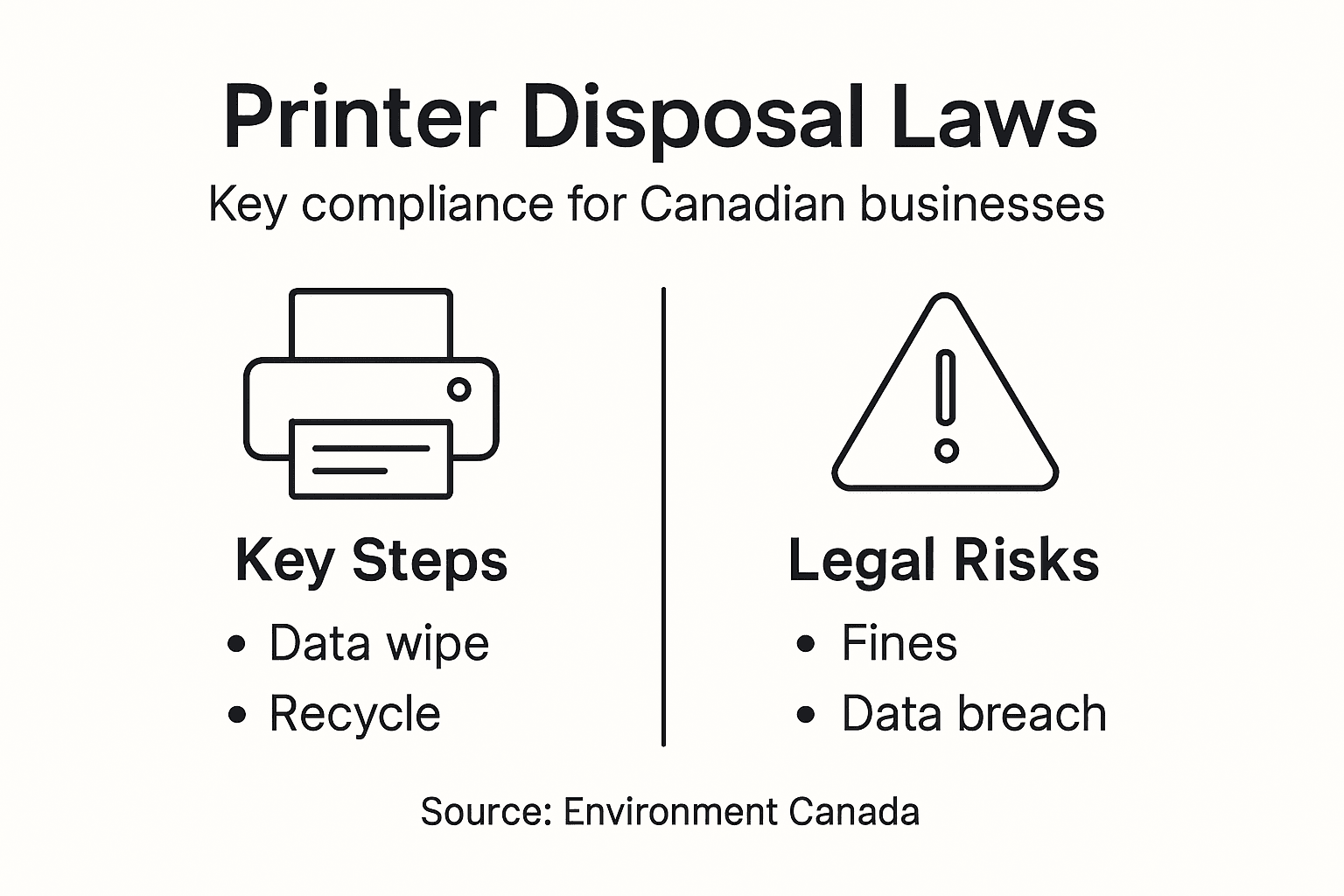
The disposal process involves multiple legal considerations, including documentation, transportation, and final processing of electronic waste. Organizations must obtain specific permits for moving printer equipment, especially when components contain potentially hazardous materials like heavy metals or electronic circuits. Businesses are legally required to work exclusively with certified electronic waste management providers who can demonstrate compliance with national environmental protection standards. This ensures that printer disposal follows strict protocols that minimize environmental impact and prevent potential contamination.
Data sanitization obligations represent another critical legal requirement for Canadian businesses. Before disposing of any printer, organizations must completely eradicate all stored electronic information to prevent potential data breaches. This goes beyond simple deletion, requiring comprehensive data elimination techniques that render all stored information unrecoverable. Failure to implement these protocols can result in significant legal penalties, particularly if sensitive business or customer information is compromised during the disposal process.
Pro tip: Maintain detailed documentation of your printer disposal process, including certificates of destruction and data sanitization reports, to demonstrate legal compliance and protect your organization from potential regulatory challenges.
Improper printer disposal represents a significant financial and legal risk for Canadian businesses, extending far beyond simple environmental concerns. Data security vulnerabilities can expose organizations to potentially devastating consequences, including substantial monetary penalties and irreparable reputational damage. Electronic devices like printers contain sensitive information that requires meticulous handling during end-of-life processes.
The financial implications of inadequate printer disposal can be severe and multifaceted. Businesses may face regulatory fines ranging from thousands to hundreds of thousands of dollars for privacy breaches. Potential costs include legal expenses, mandatory breach notifications, customer compensation, forensic investigations, and potential class-action lawsuits. Moreover, the indirect costs of lost customer trust and brand reputation can far exceed direct monetary penalties, potentially causing long-term business disruption.
Privacy compliance investigations reveal that many organizations underestimate the complexity of secure device disposal. Unauthorized data recovery from improperly discarded printers can result in significant legal and financial repercussions. Cybercriminals can exploit even minimal electronic traces to access confidential business information, customer records, financial data, and proprietary strategic documents. These risks underscore the critical importance of implementing comprehensive, legally compliant printer disposal protocols that prioritize complete data elimination and secure destruction.
Pro tip: Develop a comprehensive printer disposal checklist that documents each step of the data sanitization and physical destruction process, ensuring complete compliance and creating an auditable record of responsible electronic waste management.
Below is a quick reference on common risks and costs linked to improper printer disposal:
| Risk Type | Financial Impact | Legal Consequences | Business Effect |
|---|---|---|---|
| Data Breach | Fines, investigations | Privacy lawsuits, regulatory action | Reputational damage |
| Improper Waste | Cleanup costs | Environmental violation penalties | Loss of public trust |
| Incomplete Erasure | Recovery expenses | Non-compliance citations | Possible business interruption |
Understanding when your office printer reaches its end-of-life and the importance of proper data sanitization is critical for protecting your business from costly data breaches and ensuring compliance with Canadian regulations. If your printing equipment shows signs of performance issues or security vulnerabilities as highlighted in the article “End-of-Life for Printers: What Businesses Must Know,” it is essential to act quickly to avoid disruptions and risks.

GetToner.ca is your trusted Canadian source for affordable, reliable printing solutions ranging from high-quality OEM and compatible ink and toner cartridges to printers and multifunction devices designed for secure, efficient office use. Take control of your printing lifecycle today by exploring our selection of products and accessories that help you maintain productivity while preparing for proper printer replacement and disposal. Visit our main site to shop now and benefit from free shipping on orders over $100 and local Canadian support. Protect your business by upgrading your printer technology and managing your printing needs with GetToner.ca.
Common signs include persistent mechanical issues, escalating maintenance costs, declining print quality, frequent paper jams, inconsistent print outputs, excessive error messages, and increased troubleshooting time.
Businesses typically follow four main processes: data sanitization, physical destruction, recycling, and donation. The appropriate method depends on data sensitivity and compliance requirements.
Data sanitization is vital to protect sensitive information stored in electronic memory, preventing potential data breaches and ensuring compliance with privacy regulations.
Improper disposal can lead to substantial regulatory fines, legal expenses, privacy lawsuits, and serious reputational damage due to potential data breaches and non-compliance with environmental regulations.