

Most Canadian offices throw away hundreds of printer cartridges each year, yet studies show that recycling can reclaim up to 97 percent of a cartridge’s materials and dramatically reduce waste. With growing business costs and stronger demand for sustainable practices, American companies are setting global standards for cartridge recycling that Canadian businesses can easily follow. This guide breaks down how simple recycling steps can lower expenses, support the environment, and keep your business ahead.
| Point | Details |
|---|---|
| Environmental Impact | Recycling printer cartridges prevents toxic substances from damaging ecosystems and reduces the need for new materials. |
| Legal Compliance | Implementing recycling protocols helps businesses comply with stringent waste disposal regulations, avoiding penalties. |
| Resource Recovery | Specialized recycling can reclaim up to 97% of cartridge materials, transforming waste into reusable resources. |
| Cost Management | A well-structured recycling program can reduce overall printing supply expenses by optimizing operational efficiency. |
Printer cartridge recycling represents a critical environmental strategy for Canadian businesses seeking sustainable waste management practices. By understanding the complexities of cartridge disposal, organizations can significantly reduce their ecological footprint while supporting responsible resource recovery. Proper recycling methods enable companies to transform potential waste into valuable materials through specialized processing techniques.
The environmental impact of improper printer cartridge disposal is substantial. A single laser toner cartridge can take up to 1,000 years to decompose in a landfill, releasing harmful chemicals and heavy metals that contaminate soil and groundwater. Recycling these components prevents toxic substances from entering ecosystems and reduces the demand for virgin plastic and metal production. Most printer cartridges are composed of complex materials including plastic, metal, and electronic components that can be effectively separated and repurposed through professional recycling programs.
Canadian businesses have multiple channels for responsible cartridge recycling. Many manufacturers offer direct return programs, while specialized recycling centers and electronics waste facilities provide comprehensive disposal services. Local office supply stores frequently feature drop-off points, making it convenient for organizations to participate in sustainable waste management. By partnering with certified recycling providers, companies can ensure that their used printer cartridges are processed according to strict environmental standards.
Pro tip: Before recycling, always remove sensitive data from printer cartridges by performing a secure reset or physical data destruction to protect your business information.
Printer cartridges come in various types, each presenting unique environmental challenges for Canadian businesses. Different cartridge compositions require specialized recycling approaches to manage their complex material structures effectively. The two primary categories—inkjet and laser toner cartridges—represent distinct waste management considerations that demand targeted recycling strategies.

Inkjet cartridges typically contain intricate plastic components, liquid ink reservoirs, and electronic chips that make disposal particularly challenging. These cartridges often include multiple plastic types, residual ink chemicals, and electronic elements that can release toxic substances if improperly discarded. Laser toner cartridges present an equally complex waste profile, featuring metal components, plastic housings, and powder-based toner materials that require sophisticated separation and processing techniques to reclaim valuable resources.
Here’s a summary of printer cartridge types and their recycling complexities:
| Cartridge Type | Main Materials | Recycling Challenges | Potential for Resource Recovery |
|---|---|---|---|
| Inkjet | Plastics, ink, electronics | Multiple plastics, chemical residues | High, with specialized processing |
| Laser Toner | Metal, plastics, toner powder | Powder hazards, metal separation | Very high, metals and plastics reused |
| Multifunction | Mixed, advanced chips | Variety of components, technical disassembly | Significant, complex recovery required |
The environmental impact of printer cartridge waste extends beyond simple material disposal. Electronic components within cartridges contain trace amounts of precious metals like copper, aluminum, and even small quantities of gold, making them valuable candidates for materials recovery. By implementing comprehensive recycling programs, Canadian businesses can simultaneously reduce waste, conserve natural resources, and minimize the ecological footprint associated with printer supply consumption. Specialized recycling facilities can extract and repurpose up to 97% of a cartridge’s material composition, transforming potential landfill waste into reusable industrial resources.
Pro tip: Develop a standardized cartridge collection protocol in your office to streamline recycling efforts and ensure consistent environmental responsibility.
Comprehensive cartridge recycling processes in Canada represent a sophisticated approach to sustainable waste management for businesses across the nation. The intricate workflow begins with collection, where organizations gather used printer cartridges through dedicated recycling programs, manufacturer take-back initiatives, and specialized electronic waste collection services. These collection points serve as critical first steps in transforming potential landfill waste into valuable recycled resources.
The sorting phase represents the most complex component of the Canadian cartridge recycling ecosystem. Specialized facilities meticulously separate different cartridge types—inkjet, laser, and multifunction—based on their material composition and potential for reprocessing. Advanced sorting technologies enable technicians to identify and categorize components, ensuring maximum material recovery. Metal components, plastic housings, and electronic chips are carefully extracted and processed, with some recycling facilities capable of recovering up to 97% of a cartridge’s original material content.
Canadian recycling programs follow strict environmental protocols to minimize waste and maximize resource efficiency. After initial sorting, cartridge materials undergo detailed processing: plastics are cleaned and granulated, metals are melted and refined, and electronic components are carefully dismantled to extract precious metals like copper and trace amounts of gold. These reclaimed materials enter new manufacturing cycles, significantly reducing the demand for virgin resources and minimizing the overall environmental impact of printer supply consumption.
Pro tip: Establish a centralized cartridge collection point in your office and train employees on proper sorting and handling to maximize recycling effectiveness.
Sustainable technology management offers Canadian businesses compelling environmental and legal advantages through strategic printer cartridge recycling. Organizations that implement comprehensive recycling programs can simultaneously reduce ecological impact, mitigate potential regulatory risks, and demonstrate corporate social responsibility. By proactively addressing electronic waste, businesses create tangible opportunities for environmental stewardship and legal compliance.
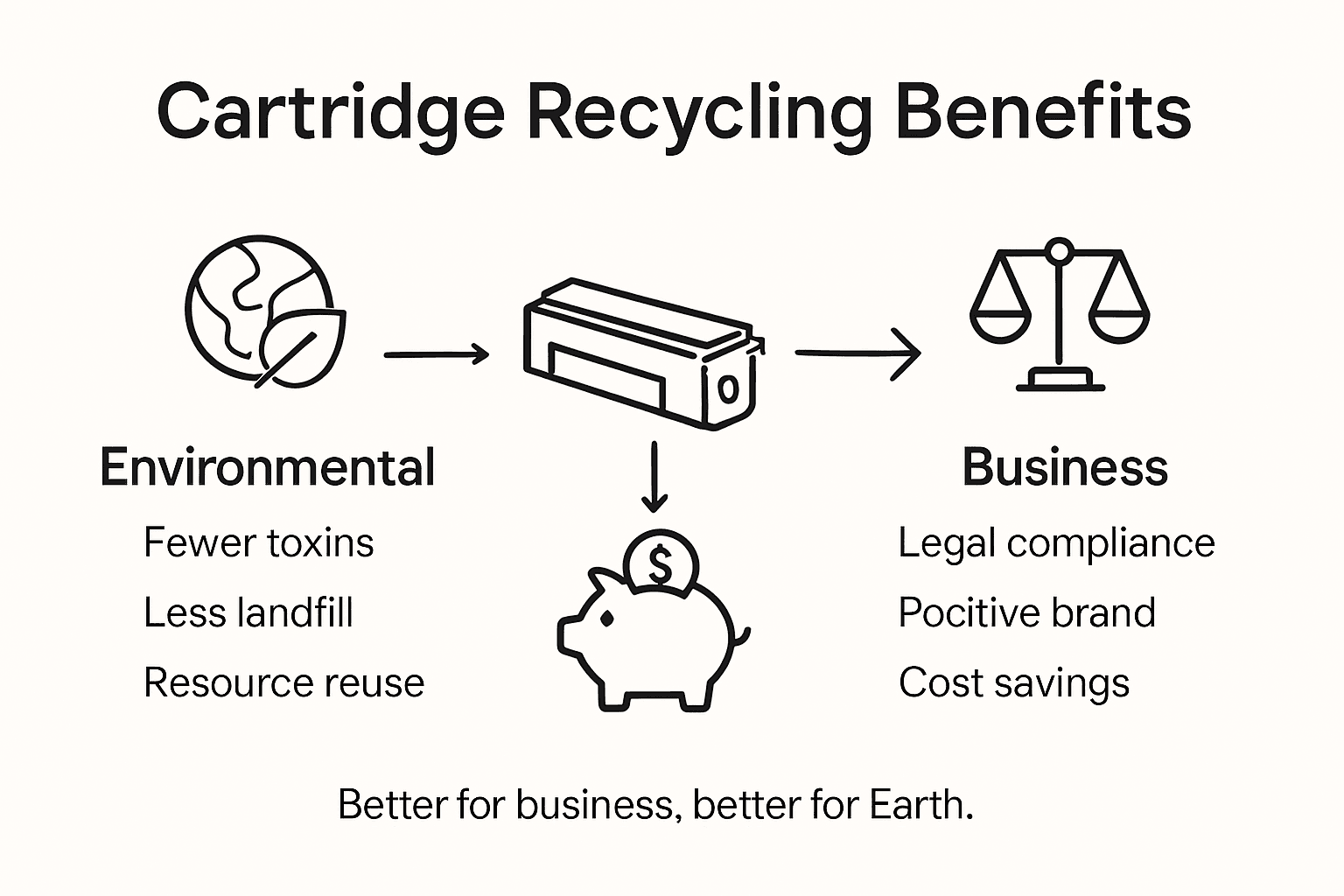
The legal landscape surrounding electronic waste disposal has become increasingly complex, with stringent regulations governing hazardous material management. Canadian businesses face potential financial penalties and reputational damage for improper disposal of electronic components containing toxic materials. Printer cartridges often contain heavy metals, plastics, and chemical residues that require specialized handling. Establishing documented recycling protocols not only ensures compliance with provincial and federal environmental regulations but also provides a clear audit trail demonstrating responsible waste management practices.
Beyond regulatory compliance, printer cartridge recycling generates substantial environmental benefits for businesses. Each recycled cartridge prevents approximately 2.5 pounds of waste from entering landfills and reduces greenhouse gas emissions associated with new material production. Companies that prioritize sustainable practices can leverage these environmental achievements in marketing communications, potentially attracting environmentally conscious customers and improving overall brand perception. Moreover, many recycling programs offer certification and documentation that businesses can use to substantiate their sustainability claims and meet corporate environmental reporting requirements.
The table below compares key business benefits of professional cartridge recycling:
| Benefit | Environmental Impact | Legal Advantage | Financial Savings |
|---|---|---|---|
| Reduced Waste | Keeps toxic materials out of landfills | Ensures regulatory compliance | Lowers disposal costs |
| Materials Recovery | Conserves natural resources | Provides audit-ready documentation | Reduces supply expenses |
| Brand Reputation | Demonstrates sustainability | Enhances stakeholder trust | Attracts green customers |
Pro tip: Develop a formal cartridge recycling policy that outlines collection procedures, tracks waste reduction metrics, and assigns organizational responsibility for sustainable waste management.
Printer cartridge economic strategies reveal a complex landscape of potential savings and hidden risks for Canadian businesses. While recycling and refilling printer cartridges can generate substantial cost reductions, organizations must navigate a nuanced terrain of potential challenges that could undermine financial benefits. Strategic approaches require comprehensive understanding of both economic opportunities and potential operational pitfalls.
The primary financial risks emerge from inconsistent cartridge quality and potential equipment damage. Improperly refilled or recycled cartridges can compromise printer performance, potentially voiding manufacturer warranties and creating unexpected repair expenses. Businesses must carefully evaluate recycling partners, ensuring they utilize high-quality remanufacturing processes that maintain strict technical standards. Some estimates suggest that poorly managed cartridge recycling programs can increase overall printing costs by 15-25% through reduced equipment reliability and unexpected maintenance requirements.
Successful cartridge recycling programs demand meticulous documentation and quality control mechanisms. Organizations should implement rigorous tracking systems that monitor cartridge performance, replacement frequency, and associated costs. By developing comprehensive metrics and regularly analyzing recycling program effectiveness, businesses can identify potential inefficiencies and optimize their sustainable technology management strategies. Emerging research indicates that businesses with structured cartridge recycling protocols can reduce printing supply expenses by up to 40% while simultaneously minimizing environmental impact.
Pro tip: Conduct a comprehensive cost-benefit analysis of your cartridge recycling program every six months, tracking both financial savings and potential equipment performance impacts.
The environmental and legal challenges of printer cartridge recycling can feel overwhelming for Canadian businesses striving for sustainability and cost efficiency. You face risks like toxic waste pollution and compliance issues, along with hidden expenses from poor cartridge quality or improper disposal methods. The good news is you can tackle these concerns head-on while saving money and supporting responsible printing practices.
GetToner.ca offers an extensive selection of affordable OEM and compatible ink and toner cartridges designed to fit your business needs. By choosing reliable products and managing your supply through trusted partners, you reduce the risk of equipment damage and simplify your printing supply chain. We provide free shipping on orders over 100 dollars and local Canadian support who understand the importance of sustainability in today’s market.
Make the smart move to support eco-friendly printing solutions without sacrificing quality or budget. Explore our wide range of cartridges, printers, and multifunction devices at GetToner.ca and start saving today. Act now to benefit from automatic discounts and ongoing promotions designed to make your recycling efforts more economical and effective. Protect your business and the environment at the same time.
Recycling printer cartridges helps prevent toxic materials from entering landfills, conserves natural resources, and reduces greenhouse gas emissions associated with the production of new materials.
The recycling process involves collecting used cartridges, sorting them by type, and then processing their materials through specialized techniques to reclaim plastics, metals, and electronics for reuse.
Inkjet cartridges have complex plastic components and liquid ink that can release harmful chemicals, while laser toner cartridges contain metal and powder toner materials that require sophisticated processing and separation for recycling.
Establishing documented recycling protocols that adhere to environmental regulations minimizes compliance risks and provides an audit trail for responsible waste management practices.